Meaning in context
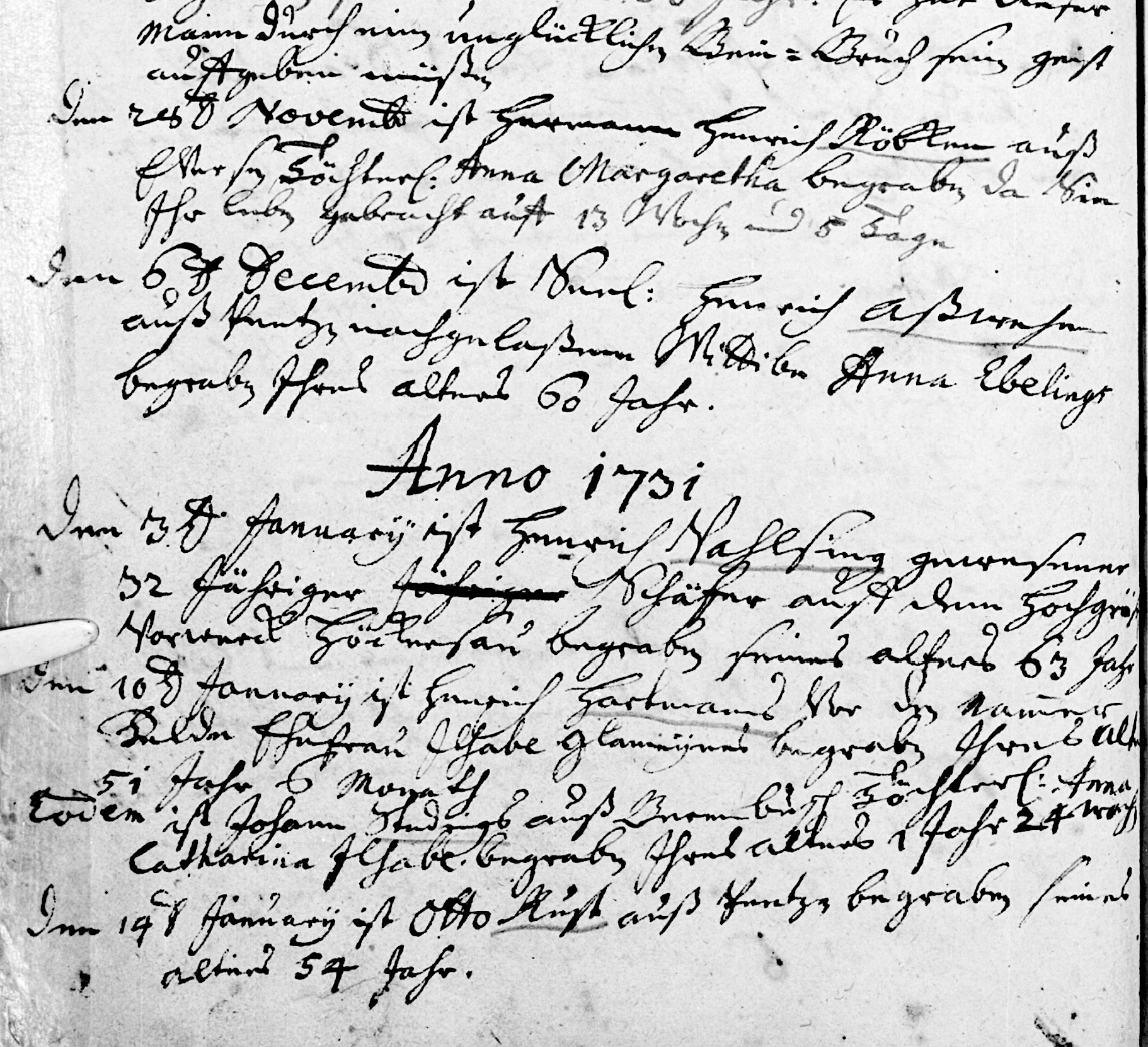
In this 1731 Petzen death record, “Hochgräflichen Vorwerde Höckersau”
refers to a manorial outlying farm (Vorwerk) belonging to the high
comital (i.e., ruling count’s) estate , located at or called
Höckersau *.
A precise breakdown:
Hochgräflich(en) — Literally “high-comital.” This denotes ownership by the reigning Graf
(Count) of Schaumburg-Lippe. In parish records, this adjective signals
sovereign or comital domain property , not a private noble or peasant
place.
Vorwerde / Vorwerk — An outlying estate or farm administratively
attached to a main manor or domain (often supplying grain, livestock, or
labor). Vorwerke were commonly staffed by shepherds, farmhands, and
overseers rather than independent farmers.
Höckersau — The specific place-name of that Vorwerk. In
Schaumburg-Lippe usage, such names often designated a small settlement,
estate complex, or cleared area associated with comital landholding.
Henrich Vahlsing was a shepherd employed at the comital Vorwerk
Höckersau *, i.e., a shepherd in service to the Count’s domain , not a
village farmer or householder in Petzen itself.
Smooth English rendering
A historically faithful translation would be:
“from the High-Comital Vorwerk of Höckersau ”
or slightly more explanatory:
“from the comital outlying estate (Vorwerk) at Höckersau ”
This phrasing accurately conveys status (sovereign ownership) ,
function (estate farm) , and location (Höckersau) as understood in
early-18th-century Schaumburg-Lippe records.
See Höckersau-Sandfurt